RSS

Aerial Tram at St. Lucia

Imagine the feeling of traveling above forest canopies in St. Lucia. This tourist attraction in the country indeed caught the interest of many who desires to fly, literally. Because in St. Lucia’s aerial tram, you’ll definitely get off walking with your feet and for a snap, you’ll see yourself soaring up above the ground.

Aerial Tram Adventure is considered as a great delight for rainforest adventurers. Considering the breath-taking top view of St. Lucia’s rainforest with a plethora of plants and animals that accentuates the journey. What’s special about this rainforest canopy tour is that you can definitely share the experience with the whole family. This is definitely a new adventure that will show you a newer perspective on rainforests.

Aerial Tram Description

St. Lucia aerial tram consists of an open-air gondola ride with a seating capacity of eight people plus one experienced guide provided by the tour company. The tour will take you approximately about two and a half hours soaring through the rich rainforest. Not to mention the view of the Caribbean Coast and all the treasures of the forest. The gondola joyride will take you as high as 120 feet above the ground; assuring you that this is not just stimulating for the eyes, but for the mind as well. As you get the chance to view the goodness of nature, a narration about St. Lucia’s rainforest and wildlife will be provided by a trained naturalist to feed your mind also. While food for the mind and the eyes are given, you can also enjoy free drinks in the tram’s bar.   
                      
What am I going to expect?

As you plan your tour at St. Lucia, specifically the aerial tram, it is good that you expect for a lot of good things that will accompany your adventure. First, you have to expect that brief orientation and safety rules and guidelines will be given before stepping off the gondola. The trip will take you ascending to the top of the mountain giving you a bird’s eye view of St. Lucia’s rainforest and wildlife including the endangered Jacquot Parrot. Aside from the trees, animals and plants that you will see brace yourself for a spectacular view of flowers in their full bloom among the giant trees. Expect also that this tour will be fully guided by a naturalist that is willing to answer all your questions about the tour and give you new insights.

  • Digg
  • Del.icio.us
  • StumbleUpon
  • Reddit
  • RSS

Guide for Bird Watching in St. Lucia


St. Lucia earned and is still earning good reputation when it comes to spectacular bird life. Several bird watching tours are offered in different bird watching sites. It is assumed that bird spotting is such a relaxing vacation option with the essence of learning a lot about wildlife. Besides, it would be fun if you’ll start developing your love for these flying forms of life which will definitely sustain your hunger for peaceful adventure.

St. Lucia Overview


The country is a relatively small country but the goodness of nature overflows despite such its size. This is an awesome place where the tropical and lush jungle intercedes with the ocean. On its west is the Atlantic Ocean and on the east is the Caribbean. It can be considered as an island with perfect views—consisting of its world-class Pitons that stand about 2,000 feet; the view of the coastlines that wonderfully margin the island; and the inland rainforests composed of flora and fauna at their best.

St. Lucia as a Bird Sanctuary


It is considered that the whole island of St. Lucia is a bird sanctuary. In fact, when we talk of bird watching, the country can never be out of the list. Several endemic birds flew over the skies, and what’s good about bird encounters here is that you’ll not see them on cages, but you yourself will see them on their natural habitat which is the forest.

What ecotourism parks offer bird watching?  I have to make two suggestions. First is the Rainforest Adventures that provide tours starting early in the morning to assure best sightings. One nature interpreter for every eight tourists is provided to be with you all the way that can help you make the most of your tour. There are five endemic species of birds that you might encounter; not to mention the St. Lucia’s national symbol, the Amazona Versicolor and all the others including St. Lucia Oriole, Banana Quit, Pewee, and Hummingbird. Wearing hiking shoes are compulsory and the tour does not allow children below 12 years of age, pregnant women, and those with back and neck injuries.

Second is the Millet Trail which offers a sight for over thirty species of birds. Five endemic species include the St. Lucia Parrot, St. Lucia Pewee, St. Lucia Oriole, St. Lucia Warbler, and the St. Lucia Black Finch. Allotted time for the tour is four hours minimum for you to make the most of your sightings. Again, you will be accompanied with experienced tour guides and booking for your tour is expected to be made 24 hours earlier.

Image credit: capmaison.com

  • Digg
  • Del.icio.us
  • StumbleUpon
  • Reddit
  • RSS

What are the Natural Attractions in St. Lucia


With the exceptional beauty of Rainforest Adventures St. Lucia, there are many great attractions and places to discover in St. Lucia where you can find a topography and ecology matched with the stunning beauty of natural resources and its environment. The Island’s protected coastal sights including the breathtaking, remarkable spires of Les Pitons. Lots of nature hikes, programs and tours have been arranged to showcase these peerless assets, allowing the visitors to enjoy the sites without harming its complex and exquisite environment.

The Pitons. They are usually located near Soufrière, surmounting 2,000 feet.  They are primitive twin peaks and St. Lucia’s famous landmark. Its mounting summit is very challenging and only the fearless climbers have ventured up to the summit.

National Rain Forest. Its rainforest is perfect to nature lovers and bird watchers. With its 19,000 acres of rich mountains and valleys, it’s a home to giant ferns, birds of paradise and various native species of trees, exotic flowers and fruits. The rare and beautiful birds like White Breasted Thrasher, St. Lucia Peewee, St. Lucia Oriole and the brightly colored St. Lucia Parrot locally known as “jacqout” inhabit in this forest.


Sulphur Springs. Currently dormant, an enormous crater where boiling black water sprays hydrogen sulfide into the air of St. Lucia, the world’s only drive-in volcano the Sulphur Springs. It is located in the southwestern side of the island, near Soufriere. The road runs up to the crater of Soufriere Volcano.

Mt. Gimie. Is the tallest mountain on the island of St. Lucia. The mountain’s peak reaches 3,117 feet tall. It is of volcanic origin and is covered by lush tropical rainforest. Its peak offers one of the most breathtaking views.

Diamond Falls. The main attraction in the Botanical Garden because of its invigorating shower under the cascading waters is still a refreshing break. The French King Louis XVI had bathhouses built for his troops at the natural, mineral-rich Diamond Falls.

Latille Gardens.  These lush grounds, filled with blooming flowers, fruit trees, and herb gardens are so tranquil you’ll never want to leave. This is one of St. Lucia’s hidden treasures filled with shading trees and vibrant waterfalls. Latille Garden is situated just off the east coast of St. Lucia. No one can miss a walk on the waterfall trails or a relaxing night under the moon and stars, amidst the scent of healthy vegetation.

Wildlife. The coast of Fort Vieux lies two small islands called the Maria Islands. The two islands are a nature reserve and a home of two species that are not found anywhere else in the world. Marked as the rarest snake- The Kouwes Snake and the Zandoli Te, a ground lizard, where the male carries a brilliant blue tail. The Fregate Island is a paradise for fregate birds during mating season.       

Image credits: nationalparks

  • Digg
  • Del.icio.us
  • StumbleUpon
  • Reddit
  • RSS

What do we benefit from the Rainforest

Are we talking about this usual topic again? Yes. Before we even forgot it, it is indeed important to remind ourselves of the so many benefits that rainforests give us. 


Natural rainforests sustain all forms of life on earth. May it be plant life, animal life, and most importantly, humans, almost all forms of life in the world are all supported by forests for survival. This might be a very common issue to talk about, but I think it would be very relevant to us to reiterate the selfless contributions that we are getting; especially now that it almost seems that we are taking this all for granted.

High-quality timber. High quality of woods generally found in tropical rainforest because their trees do not contain “tree rings.” The tree rings do not occur because the tropics do not have four seasons. This gives a smoother look to product trees such as the dipterocarps in Kalimantan’s tropical rainforest make high quality timber, which create a lot of money when sold overseas.

Land for plantations. One of the world’s biggest producer of palm oil is Indonesia. Palm oil plantations stretch as far as 31,640 square kilometers in the island, and it has grown 300% since the year 2000. It is a booming industry, and cutting down the rainforest gives more room for even bigger palm oil plantations.

Fuelwood.  Gathering wood and lighting it up for energy is still use this method in more than half of the population in Kalimantan, because they are still uncivilized in the sense that they used fuelwood for their cooking and heating. And they have an easy access to the woods they need because rainforest are within their reach.

Flood control. Rainforest can provide a buffer to its surroundings from natural disasters such as flooding. The roots can store some of the water that reaches the soil while the leaves on the trees can collect rain water to slow its process from reaching the ground.  

Agriculture. The farmers make use of the previously mentioned slash-and-burn technique for subsistence agriculture, and the big companies clear large areas of rainforest to plant palm oil plantations for commercial agriculture.

Land for settlement. The move from rural to urban areas has increased the need to further expand communities into the forests. This creates the need for more cities that need more land.

Tourism. Tourism is a big part of some economy. The rainforest play the role as a beautiful environment for tourists. National parks can be visited, which contains orangutans which roaming around the rainforest freely. It becomes a place that offers a unique experience to get in touch with the Mother Nature.  

Fresh air. With an abundance of trees from the rainforest it’s a perfect place where people can breathe fresh air. There is such a high number of vegetation in the forest that contribute the air to become very clean and even healthy to breathe in.

Image credits: blog.farmusa.org

  • Digg
  • Del.icio.us
  • StumbleUpon
  • Reddit
  • RSS

Bird Species you’ll see in St. Lucia

St. Lucia is blessed with richness of skies due to wide variation of avifauna. It is a good place for St. Lucia bird watching and nature’s lover paradise because of its 117 bird species, 6 being endemic to the island: the St. Lucia Parrot, St. Lucia Pewee, St. Lucia Warbler, St. Lucia Black Finch, St. Lucia Oriole, and St. Lucia Wren.

St. Lucia Parrot. Also known as Jacqout, is found only in the Island of St. Lucia in the Eastern Caribbean. In order to the other members of the parrot family, its feathers are usually green, with rainbow-colored of bright red and blue on the edges of its wing. It has also a touch of dark red on its chest and light blue on the top the head. Although these parrots are over foot long and has multi-colored feathers they are hard to spot in the forest canopy where they live. Perhaps its one of the most colorful of the entire species of the Amazon parrots. And it is one of the largest birds in St. Lucia.

Unfortunately for this beautiful, unique species, a combination of human traits and nature place their long-term survival is in danger. Actually it is the best known St. Lucian endemic bird species. A few years ago, the St. Lucian Parrot is in danger of becoming extinct because of deforestation of St. Lucia rainforest and uncontrolled hunting, which decreases the parrot populations. Now, there are about 800+/-25 living in rainforest.  

St. Lucia Pewee. It is commonly known as Gobe-Mouche or Pin Kaka, with dark-olive brown upperparts and reddish-brown under parts. The adult Pewee grows about 15 cm in length. Its natural habitats are subtropical or tropical dry forests, subtropical or tropical moist forests, and subtropical or tropical moist montane forests. Pewee is a kind of timid bird that is usually seen in openings in the forest understory where they sally for insects. Its calling sound is a rising pree-e-e and a high-pitched peet-peet-peet. The pewee nest is a cup-shaped nest made of leaves and moss placed on a branch. The female pewee lays two dark cream-colored eggs, heavily spotted with brown. The usual breeding season is May and June. St Lucia Pewee is full endemic because they were considered races of Lesser Antillean Pewee. Despite of genetic and morphological differences have caused ornithologists to assign full species status to both pewees.

St. Lucia Warbler. Is a species of bird in the Parulidae Family. Its local names are Chic-chic and Sequia Ba bad. It can be recognized by its bluish-grey upperparts; yellow throat and breast; yellow eyebrow stripe; and black crescent below the eye. Their voice delivers a loud trill, changing in pitch and speed. It is found in all forest types and at all altitudes. They forage energetically, collects insects and spiders from leaves and twigs. The St. Lucia Warbler resides in western and eastern coasts of St. Lucia. And this is one of the two St. Lucian endemic warblers.

St. Lucia Black Finch. Commonly called Moisson Pied-blanc, black or brown finch with heavy, black bill. The female can be recognized because of its grey head above and buffy below. The male black finch does not have a patch of red on its throat like the female one. But both of them have pink legs and they bob their tails vertically. The vocalization is a buzz tick-zwee-swisiwis you with the accents on the second and last notes. It grows from 13-14 cm tall with a breeding season from November to June.


St. Lucia Oriole. Also known as Carouge, which grows about 20-22 cm length. Commonly found in woodlands including dry and moist forest. The adult is black except for the lower back, rump, shoulder and lower belly which are rich orange or yellow orange. The womanly is similar to the male, but orange-yellow is duller; the immature is mostly greenish with a blackish throat. The nest is a well-made basket woven of grass and fiber. Their breeding season is from April to July. And it is endemic because of natural calamities like hurricanes, pest and diseases, aerial application of agricultural pesticides, deforestation and hunting.


St. Lucia Wren. The St. Lucia Wren locally known as Rossignol a small, active brown bird with black bars on its wings and tail, an indistinct pale stripe above the eye with a relatively large head. It is 11.5-13 cm length. The breeding season is May to August. The female lays two to six whitish eggs, heavily speckled brownish-red. It is considered as endemic because the wren is threatened by the loss of its forest habitat.

Image credit:
www.wvbirder.org
ibc.lynxeds.com
birdseen.co.uk
charliesbirdblog.com

  • Digg
  • Del.icio.us
  • StumbleUpon
  • Reddit
  • RSS

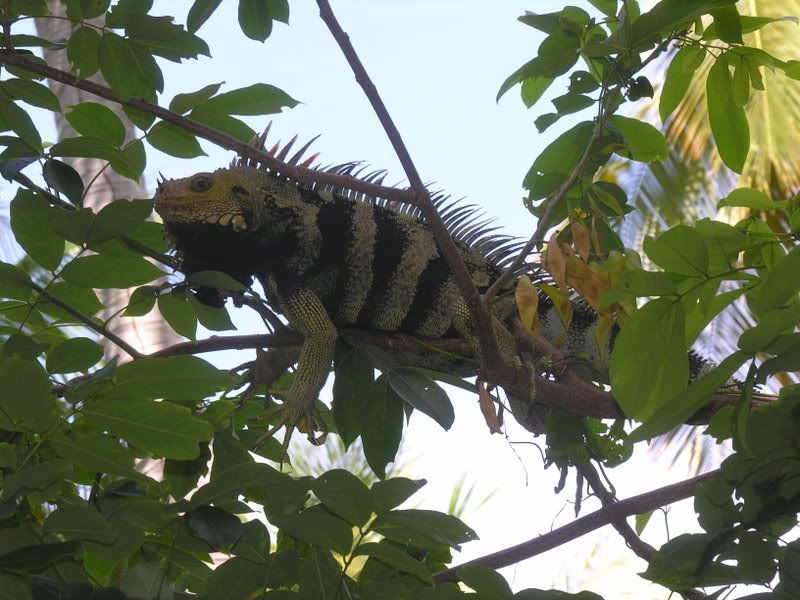
Protecting the St. Lucian Iguana of the Rainforest


The first inhabitants of St. Lucia, or the Arawaks, first named the country as Iouanalao meaning the ‘Land of the Iguana’. Tracing back to that time, we can say that species of the St. Lucian green Iguana is so rampant to the island making it an emblem to represent the area. One important thing about the importance of this Green Iguana on St. Lucia is that this is their largest land mammal and is found on no other island. 

At the present time, sadly, this Iguana is a rare spot to the island and even the local people know little about this animal that once dominate their country. There are several threats including human activities and predation that leads to its dredging condition right now and those will be discussed in the later part of this article.

An Interesting Specie

Scientists classified the St. Lucian Iguana as a species of a Green Iguana having the scientific name Iguana iguana. This is a wild type of green iguana and is locally known as ‘Iyanola’. Scientists concluded that this rare Iguana is unique specie among the family of lizards, and is only found on the island along the North East coast. Adults are light green in color with black stripes. Adult males possess a dewlap—a piece of black skin hanging in their necks that are used to attract females when inflated. Also, the St. Lucian Green Iguanas tackle their opponents using their long, hard tail.

Bearing the title of being the largest land mammal in St. Lucia, the green iguana can grow up to six feet long. What’s interesting is that they are also excellent swimmers! No doubt, they might have been very adapted to the environment for it was studied that they have been here even before we existed; more or less half a million years. 

Threats to St. Lucian Green Iguana

Just like other threatened species in the world, the St. Lucian Green Iguana is on a serious fight for survival. There are animal hunters in St. Lucia that still hunt iguanas for food. Though this activity is not widely practice in the island, still it is considered to be a great threat to their number. Another factor considered to have caused iguanas’ decreasing population is predation. Dogs are the only animal in St. Lucia that kills adult iguanas. Cats are also killing young and newly hatched iguanas. 

Beaches are of great importance to iguanas for they lay and nest their eggs there. Sand mining in St. Lucia also accounts for a great loss in their number; not just for Green Iguanas but for turtles as well. 

Image credit: http://www.reptileforums.co.uk/

  • Digg
  • Del.icio.us
  • StumbleUpon
  • Reddit
  • RSS

Discover Azuero Peninsula


Aside from the very famous Panama Canal, Bocas del Toro and all the other tourist attractions you know in Panama, there’s still one needed to be recognized—the Azuero Peninsula. One great thing about the country of Panama is that it has all the stuffs needed to suit everyone’s taste from all walks of life. 


The Cultural Heartland of Panama

Azuero peninsula long holds the name of being the cradle of traditional customs and folklores in Panama, probably due to its historical importance. This region was among the first parts in Panama to be inhabited by settlers about 10,000 years ago. Moreover, the northern part of the region was first cultivated even before the Spaniards came in the area.

Azuero Peninsula has two seasons- wet and dry. But the only difference from the other Panamanian regions, it has a dryer climate very suitable for beach activities which it is known for. The area has endless beach walks and coasts; in fact, the western part of which is among the favorite sunset viewing areas in the world. Surely, you’ll not just love the view and the landscape of Azuero, because it also hosts over 40 of celebrated festivals and folklore events every year. Imagine having that number of celebrations in a year! You’ll definitely love and embrace the traditional customs in Panama through the Azuero Peninsula.

Actually, the area is divided into two regions: the Eastern and Western Azuero. In Eastern Azuero Peninsula, baseball is a very famous activity and is also the center of attraction during their carnival. Here you can also find the town of Pedasi, a Spanish colonial town known for its plazas and creatively painted homes. On the other hand, the Western Azuero Peninsula boasts not only its sunset view, but also farming, cattle ranching and of course, beaches. The Western area is just opening up for development. If you prefer living in a developed area surrounded by meny happy and friendly people, the Eastern side has it all for you. But if you like a quiet area far from the noise of plenty of people, you’re suited for the Western side.

The hospitality of the people of Azuero will definitely keep you coming back. Anyway, the place alone—along with its pristine, long beaches, wonderful landscape, traditional festivals and first class amenities are enough to place Azuero Peninsula on your list for a perfect vacation and retirement refuge.

Image credit: http://www.buyingrealestateinpanama.com/

  • Digg
  • Del.icio.us
  • StumbleUpon
  • Reddit
  • RSS